
When planning a birdwatching expedition to the Moroccan Sahara, timing isn’t just important—it dictates the entire experience. While the deep desert supports a tough, resilient population of resident species year-round, the true magic of Merzouga birding happens during the spring migration.
Between March and May, millions of trans-Saharan migrants use the Moroccan flyway as a critical staging ground before crossing the Mediterranean. If you want to maximize your Western Palearctic species list, this guide breaks down exactly when to visit, what to look for, and how the changing seasons impact the local micro-habitats around Erg Chebbi and Dayet Srji.
Why Spring (March to May) is the Golden Window
For ornithologists operating in North Africa, Merzouga in the spring is a bucket-list destination. As winter fades, millions of birds travel north from sub-Saharan Africa. The diverse habitats surrounding Merzouga—including tamarisk scrub, rocky hamada, and seasonal wetlands—provide vital resting and feeding grounds.
During this three-month window, you get the ultimate overlap: arriving summer breeders, passing passage migrants, and highly active year-round desert residents engaging in breeding displays.
For a broader look at the region’s diverse ecosystems, read our comprehensive guide: A Birder’s Guide to the Moroccan Sahara: What to Expect.
Month-by-Month Breakdown
March: The Vanguard Arrives
March marks the awakening of the desert. The weather is incredibly mild and sunny, making full-day birding possible without the oppressive midday heat.
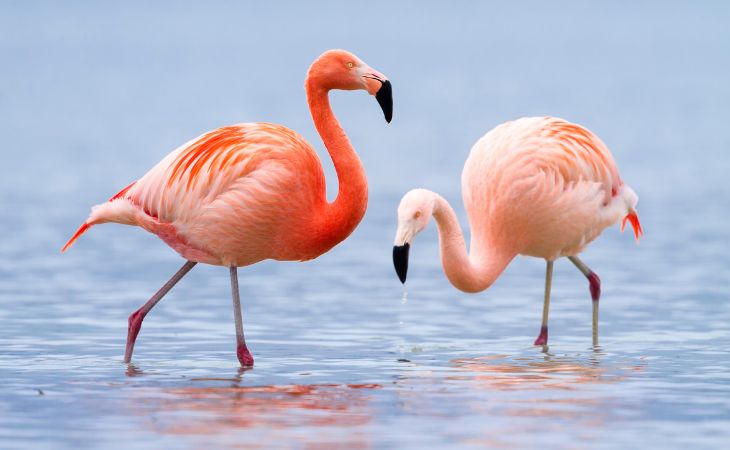
- The Wetlands: If winter rains were sufficient, Dayet Srji will be brimming. This is a prime time for waterfowl, waders, and the iconic pink waves of Greater Flamingos.
- The Scrub: Early migrants begin appearing in the dry wadis and acacia groves. You can start listening for the far-reaching song of the Greater Hoopoe-Lark and searching for the first arriving Egyptian Nightjars hiding in the tamarisk shadows.
April: Peak Migration (The Best Month)
If you can only pick one month for your Merzouga birding trip, choose April. The sheer volume of trans-Saharan migrants passing through is staggering.
- Target Species: The scrubland comes alive with warblers, including the elusive African Desert Warbler and Tristram’s Warbler. Ground-dwelling birds like the Cream-colored Courser and various sandgrouse species (Spotted and Crowned) are highly active across the stony plains.
- Raptor Action: Look up. Migrating raptors, alongside resident Lanner Falcons and Pharaoh Eagle-Owls, use the thermal updrafts off the dunes and rocky outcrops for hunting.
May: Late Migrants and Desert Breeders
By May, temperatures are rising rapidly, often pushing into the high 30s Celsius (90s Fahrenheit) by midday. However, this is peak breeding season for local specialists.
- The Strategy: You must shift to early morning and late afternoon schedules. The midday heat shimmer (mirage effect) will render spotting scopes useless by 11:00 AM.
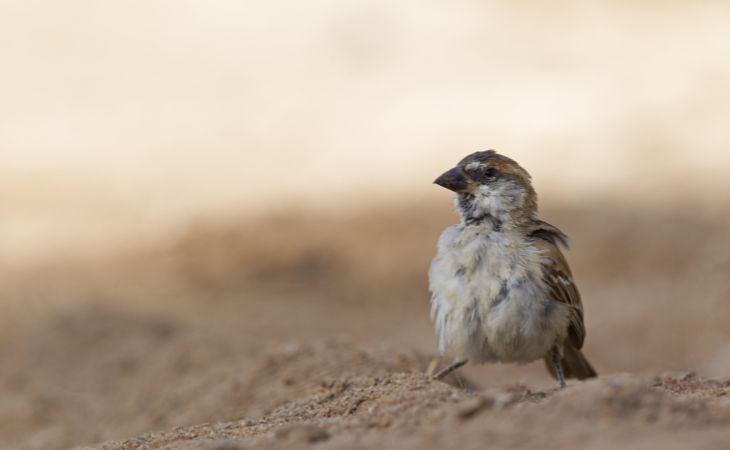
- The Reward: May is incredible for observing the nesting behaviors of the Desert Sparrow and the White-crowned Wheatear near local settlements and desert camps.
Looking to target specific local species? Check out our dedicated post: How to Spot the Desert Sparrow in Merzouga.
June to August: The Scorching Summer
We generally do not recommend dedicated birding trips during the peak summer. Temperatures regularly exceed 40°C (104°F). Dayet Srji typically dries out completely, turning into a cracked salt flat. While die-hard birders can still track down resident larks and wheatears at dawn, bird activity drops dramatically as species conserve energy and moisture to survive the extreme environment.
September to November: The Autumn Return
Autumn brings the southward migration. While generally less concentrated than the spring rush, September and October are fantastic months for tracking mixed feeding flocks and returning migrants heading back to sub-Saharan Africa.
- Highlights: The temperatures become comfortable again. This is a highly productive time for spotting passing raptors and scanning the hamada for diverse lark species like the Thick-billed and Temminck’s Larks.
December to February: The Winter Respite
Winter in the Sahara means bitterly cold mornings and crisp, clear, comfortable afternoons.
- Wintering Flocks: If the seasonal lake holds water, it serves as a crucial wintering ground for ducks, coots, and lingering flamingos. You can also spot wintering raptors. While the overall species count is lower than in April, the desert is peaceful, and the lighting is spectacularly clear for avian photography.

Planning Your Desert Expedition
Because Merzouga’s birdlife relies heavily on unpredictable seasonal rains and insect hatches, working with local experts makes a massive difference. We highly recommend logging your sightings and checking recent hot-spot activity on global platforms like eBird before you arrive to see what is currently active in the area.
Furthermore, adhering to ethical birding guidelines—especially around sensitive desert breeders—is crucial. Organizations like BirdLife International provide excellent resources on minimizing your footprint in fragile ecosystems.
Whether you are seeking the perfect photograph of a Pharaoh Eagle-Owl or simply want to witness the incredible spectacle of trans-Saharan migration, timing your trip for the spring will guarantee an unforgettable Saharan adventure.
Ready to build your itinerary? Explore our regional breakdown: Top 5 Birdwatching Hotspots Around Erg Chebbi.


