
Merzouga is a famous place in Morocco usually because of the big sand dunes called Erg Chebbi. It is like a gateway to the desert. Many people come here just to see the sand and ride camels. It is very beautiful and quiet there. But Merzouga is also a very special place for people who like birds.
You might think a dry desert does not have many birds but this is not true. It is a surprise for many travelers. The landscape is very dry and hot but sometimes there is water. There is a seasonal lake called Dayet Srji nearby. When this lake has water it is like a miracle. You can see the pink flamingos and other water birds with the big orange sand dunes behind them. It is a very unique view that you cannot find in many places.
We write this guide to help you understand birdwatching here. We want to tell you about the special birds you can find in the desert and near the water. We will also share some simple advice on how to visit and where to look. If you love nature and birds Merzouga is a place you should really think about visiting.
Why Merzouga is Important for Birding?
Merzouga is important for birds for a few specific reasons. It is not just one big pile of sand. The area is a hotspot because it has different types of nature very close together. There are three main parts. First you have the big famous sand dunes of Erg Chebbi. Then you have the flat stony desert with small bushes which is called “hamada”. And finally you have the seasonal lake. Because these three different homes are all in one place, we see many different kinds of birds here.
Another big reason is where Merzouga is on the map. It sits right on the edge of the big Sahara desert. When birds travel between Africa and Europe for migration they have a very long and hard flight. They need a place to stop and rest. Merzouga acts like a rest station for them. They stop here to eat and drink before they cross the hot desert or after they finish crossing it.
Also this place is special because it is easy for visitors. usually if you want to see true desert birds you have to go very far away into the wild. It can be difficult and expensive. But Merzouga is accessible. There are roads and hotels here. You can see special birds that usually live deep in the desert without needing a hard expedition. It makes watching these rare species much simpler for people.
Key Target Species in Merzouga
This is the most important part of our guide. Here we will talk about the birds that actually live in the desert. These birds are special because they stay here even when it is very hot or very dry. They are the residents. If you come to Merzouga you will look for these specific ones. I will explain them to you simply so you know what to look for.
The Nightjar and Courser
These two birds are the masters of hiding. They are very hard to spot because their colors match the sand and ground perfectly. You usually need good luck or a very sharp eye to see them before they move.
The Egyptian Nightjar
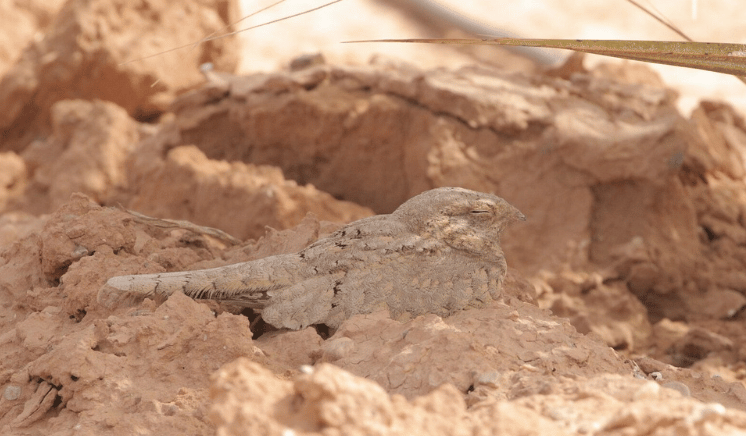
This bird is maybe the most famous one that birdwatchers want to find here. It is a very mysterious bird. During the day you usually cannot see it because it sleeps on the ground and its color is exactly like the sand. It is perfect camouflage. But when the sun goes down and it starts to get dark, which we call dusk, this bird wakes up. The best place to look for the Egyptian Nightjar is near the water or the dry river beds which we call “wadis”. They come here to hunt for insects. You might see them flying quietly over the water. It is a very special moment when you see one. You have to be patient and maybe use a torch or light but be careful not to disturb them too much.
The Cream-colored Courser
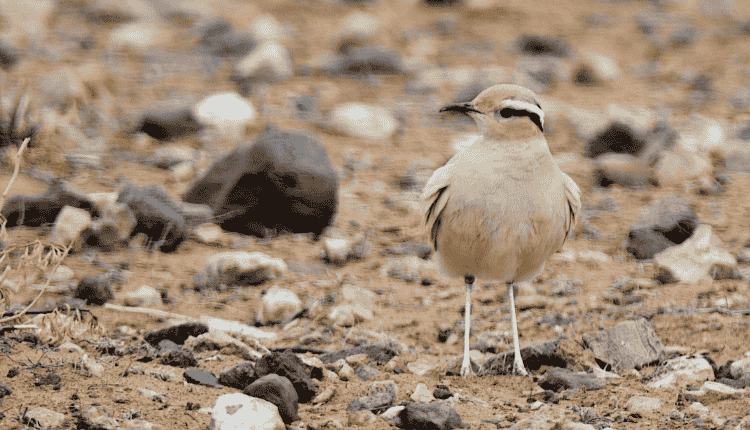
The Cream-colored Courser is another expert at hiding. As the name says it is a creamy color. It lives on the flat stony desert parts. When it stands still it looks just like a rock or a lump of sand. It is very hard to see. Usually you see them when they run. They have long legs and they run very fast across the ground. Then they stop suddenly and stand very tall. When they fly you can see black underneath their wings which is a nice surprise. They are elegant birds.
The Sandgrouses
Sandgrouse are famous desert birds that fly in groups. They are known for their habit of flying to water sources every morning. Watching them come to drink is one of the best experiences in Merzouga.
The Spotted Sandgrouse

In the desert water is life. The Spotted Sandgrouse shows this very well. These birds are very pretty with small spots all over them. The best time to see them is in the morning. They fly in groups to find water to drink. If you go to a water hole or a puddle in the morning you might hear them first. They make a specific sound while flying. They land near the water and drink quickly before flying away again. It is a very regular habit so if you wait at the water you have a good chance to see them.
The Crowned Sandgrouse

This one looks a bit like the Spotted Sandgrouse but it is different. It is good to know how to tell them apart. The Crowned Sandgrouse is usually a bit smaller. The male has a distinct pattern on his face and head that looks like a darker mask or line. Also their sound is different when they fly. Birdwatchers often listen to the calls to know which one is coming. They also like the stony desert areas. Seeing both types of sandgrouse in one morning is a very good start to the day.
The Larks
The desert is full of larks. They are ground birds that run very fast. Some of them look quite similar to each other, so it is a fun challenge to tell them apart. Here are the main ones you will see running on the sand.
The Greater Hoopoe-Lark

This is a very funny and beautiful bird. It is called Hoopoe-Lark because it has a long curved beak like a Hoopoe bird but it is actually a lark. It has long legs and runs a lot. The best thing about this bird is its display flight. The male flies up into the air and does flips and turns while showing his black and white wings. It looks like a show. Then he lands and runs away. It is very nice to watch this behavior in the quiet desert.
The Desert Lark
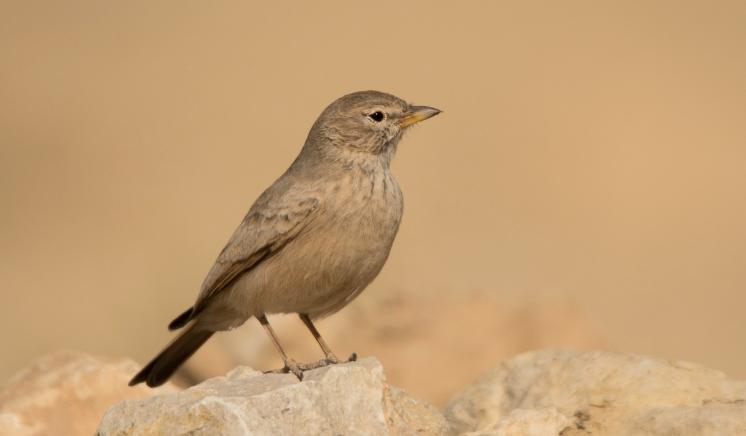
This is a very common bird here. You will probably see many of them. The Desert Lark is simple and brown. Its color matches the rocks exactly. It is a quiet bird that stays on the ground mostly. It does not have big marks or bright colors. It is just perfectly made for the desert background. Because they are common you can practice watching them to get used to the desert shapes.
The Crested Lark
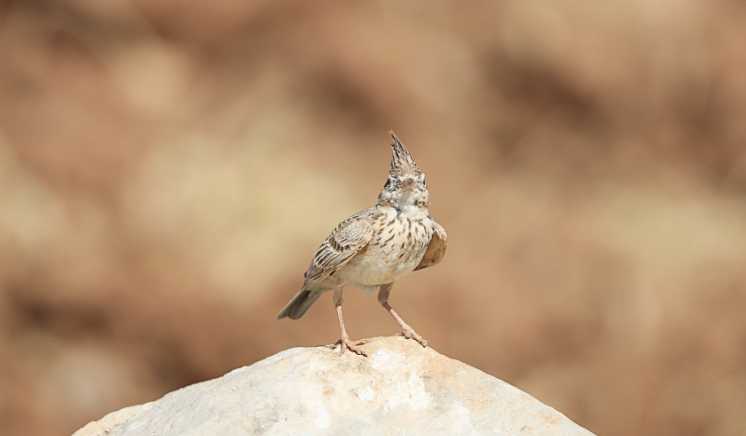
Sometimes people confuse this with the Desert Lark. But the Crested Lark is a little bit different. It is usually darker and looks a bit messier. The most important thing is the crest on its head. It has feathers that stick up like a small spike or hair. The Desert Lark can raise feathers on its head too sometimes but the Crested Lark has a more obvious shape. You see them often near roads or where people live too.
The Wheatears
Wheatears are lovely birds that like to sit on top of bushes or rocks to watch the area. They are usually easier to see than other desert birds because they show themselves openly. Each type has a different pattern to look for.
The Desert Wheatear
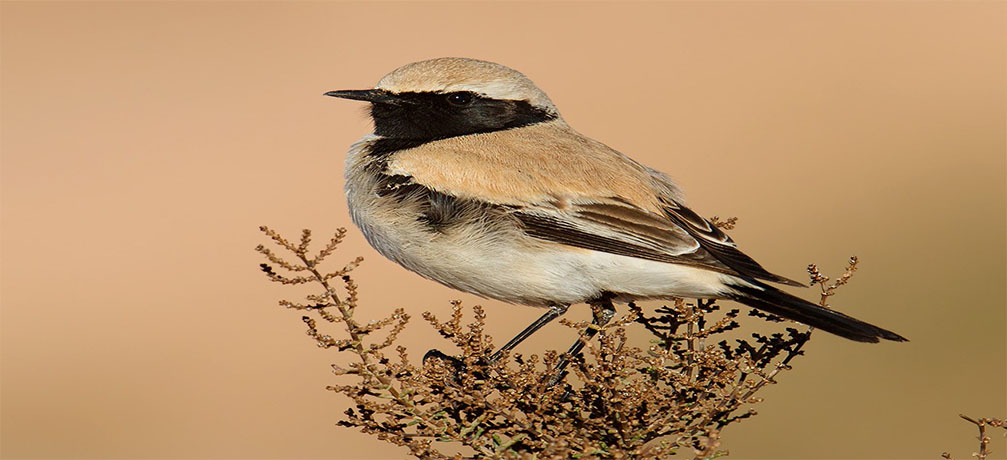
I really like this bird. The male Desert Wheatear is very striking. He has a sandy color on his back but his throat is black and his tail is black and white. When he flies or lands you can see the tail pattern very clearly. They like to sit on top of small bushes or rocks. They sit very straight and look around. It makes for a very nice photo because they pose for you on the bush.
The Black Wheatear

This bird is very different from the others. It is almost all black. You will not find this one in the sand dunes usually. It prefers the rocky slopes and cliffs. It is a strong bird and looks very dark against the light rocks. If you go to the hamada or rocky hills you should look for this dark shape jumping on the stones.
Warblers and Babblers
These are the smaller birds that usually stay close to the vegetation. They spend a lot of time hopping inside or under the bushes to stay safe and find insects. You often need to listen for them first.
The African Desert Warbler

This is a tiny little bird. It is very small and delicate. It has a pale color and a yellow eye. It stays very low in the small bushes. It does not fly high often. Because it stays inside the bushes it can be hard to spot. You have to watch for movement in the low branches. It moves quickly. It is a real desert survivor to be so small in such a big place.
Tristram’s Warbler
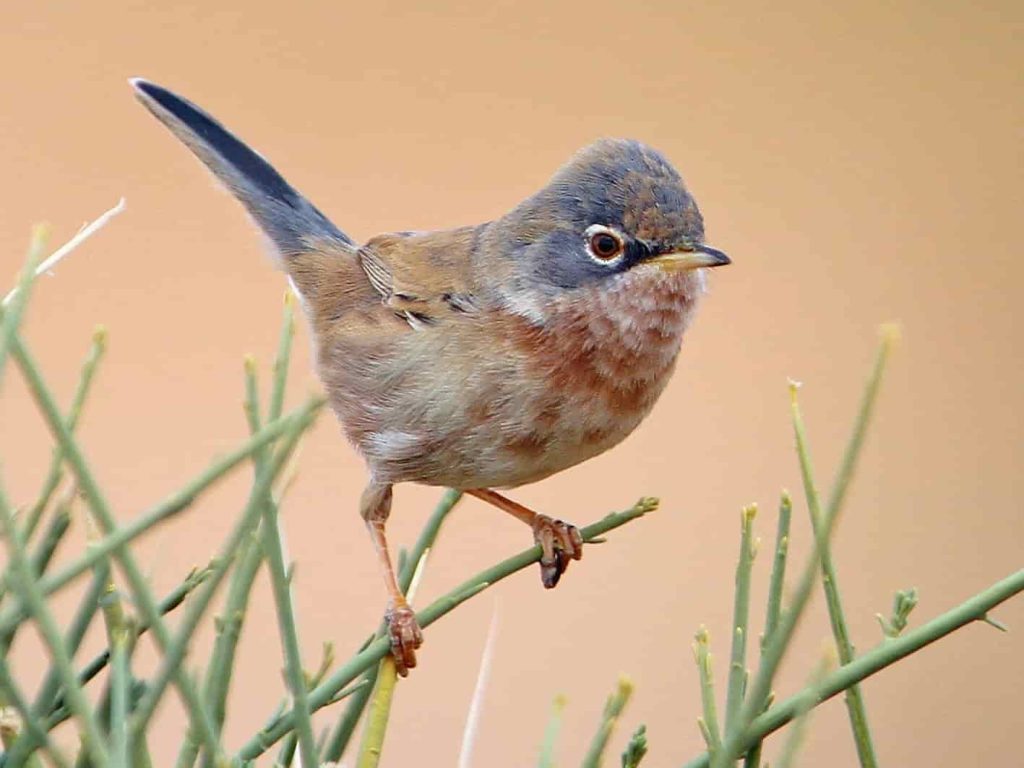
This is a special find for birders. It is also a warbler that likes bushes and scrub. It has a darker color than the Desert Warbler. It is a bit shy. Finding one is a good feeling because they are not everywhere. You need to look carefully in the vegetation.
The Fulvous Babbler

These birds are very fun to watch. They are social birds which means they like to be in groups. They are also called Fulvous Chatterers because they make noise and talk to each other. They have a warm brown color and long tails. You will often see a family of them jumping on the ground together near the bushes. They help each other and look for food as a team.
The Yellow-browed Warbler
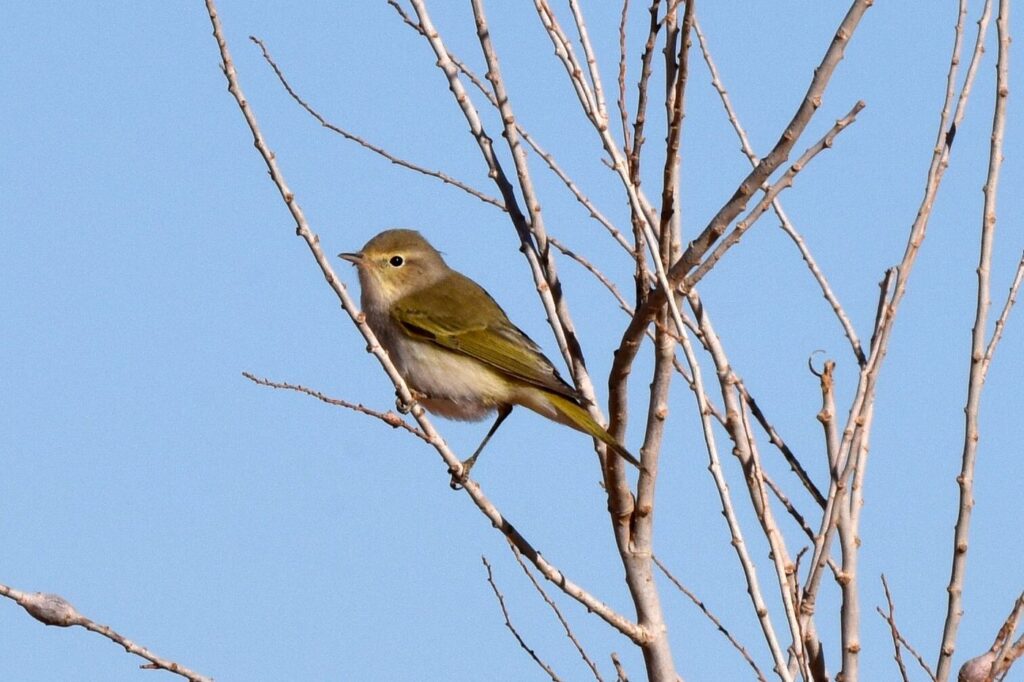
I should mention this bird too but it is different. It is not a main resident like the others. It is a rarity or a migrant. This means it passes through or gets lost sometimes. It is a very small green and yellow bird. It is a big bonus if you see one but do not expect it every time.
Sparrows, Shrikes, and Raptors
Finally, there are other important birds that call the desert home. From the pale sparrows of the dunes to the hunters that watch from the sky, this mix of species makes the desert ecosystem complete.
The Desert Sparrow

This is a very beautiful sparrow. It is not like the dirty sparrows in the city. The Desert Sparrow is very clean and pale. The male has a nice pattern but the colors are soft creamy and white. They live right in the sand dunes. They are becoming a bit rare in some places but you can still find them here. another informatio to people who don’t know that desert sparrow doesn’t like to stay in places where other birds exist like the ones that came from cities, he always loves to stay alone in wild areas. They look very gentle.
The House Sparrow

I mention this just so you can compare. You know this bird. It lives in the towns and villages. It is darker and messier than the Desert Sparrow. If you see a sparrow near the hotel check if it is the clean Desert one or the normal House one.
The Great Grey Shrike

This is a hunter. The one we have here is the “Southern” subspecies. It is grey and white with a black mask. It likes to sit on the very top of a tree or a wire. It sits high up to look for lizards or big insects. It is easy to see because it sits so openly.
The Kestrel Falcon

This is the main small raptor or bird of prey you will see. It is a falcon. You can recognize it because it hovers. This means it flies in one spot in the air without moving forward while looking down at the ground. It is hunting for mice or beetles. It is very common but always nice to see in the blue sky.
Main Locations to Spot These Birds
Knowing the birds is good, but you also need to know exactly where to find them. Merzouga is big and the birds are not just everywhere. They have their favorite places. If you look in the right zone, you have much better chance to see them.
The Erg Chebbi Dunes These are the famous big orange sand mountains. They are beautiful but not many birds live deep inside the sand. However, the edges of the dunes are very good. This is the home of the Desert Sparrow. They like the soft sand and the small plants that grow there. Also, you can see the Greater Hoopoe-Lark here. It likes to run on the sand and do its display flight over the dunes. It is a very nice background for photos.
The Wadis (Dry Riverbeds) A “Wadi” is a river that is usually dry. It only has water when it rains very hard. But these places have many bushes and trees like Acacia. This makes them perfect for birds that need to hide. This is the best place to look for the Egyptian Nightjar when the sun goes down. During the day, the Warblers and Babblers stay here in the shade of the bushes. It is a bit greener here than the rest of the desert.
The Hamada (Black Desert) This is the flat, dark, stony ground. It looks empty but it is full of life. This is the best place for the runners. The Cream-colored Courser loves this flat ground because it can run fast. Also, the Sandgrouse and many types of Larks prefer the stones because they can camouflage very well. You need to drive slowly here and look carefully at the ground.
Dayet Srji (Seasonal Lake) This lake is special. It is not always there. It depends on the rain in the winter. If there is water, it is magic. It attracts many migrant birds from Europe like flamingos and ducks. Also, the sandgrouse often come here to drink if there is water. It is a very nice place to sit and watch.
Practical Information
To have a good trip for birding in Merzouga, you need to plan a little bit. Here is some simple advice to help you.
The Best Season The best time to come is in the Spring. This is usually from March to May. In these months, the weather is nice. It is warm but not too hot like in the summer. Also, this is the time when birds are moving for migration. You can see the resident birds and also the visitors passing through. It makes the list of birds you see much bigger. The winter is also okay but some birds might be harder to find, and summer is too hot for walking outside.
Equipment You do not need heavy things but please bring binoculars. The desert is wide and open, and birds can be far away. Without binoculars, a bird is just a small dot. Also, the most important thing is water. The desert is very dry. Even if you do not feel thirsty, you must drink water. Wear a hat and good shoes for walking on rocks.
Guides For some birds, it is easy to find them yourself. But for the difficult ones, like the Egyptian Nightjar or finding the specific spot for the Desert Sparrow, it is better to take a local guide. The local people know the desert very well. They know exactly which bush the bird likes. It saves you a lot of time and they can show you things you would miss.
Conclusion
Merzouga is a wonderful place. It is not just about the big dunes and camels. It is a quiet place where nature is very strong. Walking in the desert silence and waiting for a special bird is a feeling you will not forget.
We hope this guide helps you find the beautiful birds of the Moroccan desert. Even if you see just a few of them, the experience of being in this landscape is the real prize. Enjoy your adventure and happy birding.


